Du Bois visualizations

Lecture 10

Dr. Mine Çetinkaya-Rundel

Duke University
STA 313 - Spring 2026

Warm up

Announcements

  • Mini-project 1 due today at 5 pm

  • Project 1:

    • Proposal feedback is available, please review!
    • Peer evaluations are posted, and there will be one more round at the end of the project
  • Schedule update:

    • HW 3 due date pushed to Thursday, 3/5 at 5 pm (right before spring break) to give you a bit more time + additional lab session to work on it.
    • Project guidance on Wednesday, visual inference next week
  • Project presentations next Thursday in lab

Setup

# load packages
library(tidyverse)
library(ggthemes)
library(scales)

# set theme for ggplot2
ggplot2::theme_set(ggplot2::theme_minimal(base_size = 14))

# set figure parameters for knitr
knitr::opts_chunk$set(
  fig.width = 7, # 7" width
  fig.asp = 0.618, # the golden ratio
  fig.retina = 3, # dpi multiplier for displaying HTML output on retina
  fig.align = "center", # center align figures
  dpi = 300 # higher dpi, sharper image
)

W.E.B. Du Bois

Important

The visualizations presented in this lecture are original data visualizations by W.E.B. Du Bois and the captions reflect the language of the time in history.

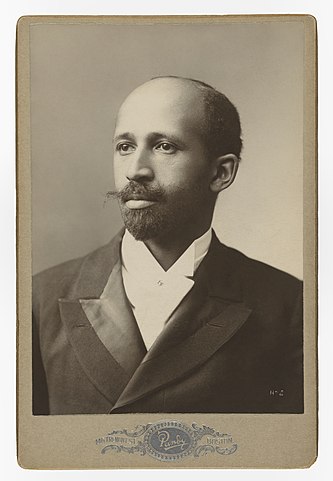
W.E.B. Du Bois

W.E.B. (William Edward Burghardt) Du Bois (February 23, 1868 – August 27, 1963) was a professor of history, sociology, and economics at Atlanta University and one of the founders of the NAACP in 1909.
W.E.B. Du Bois

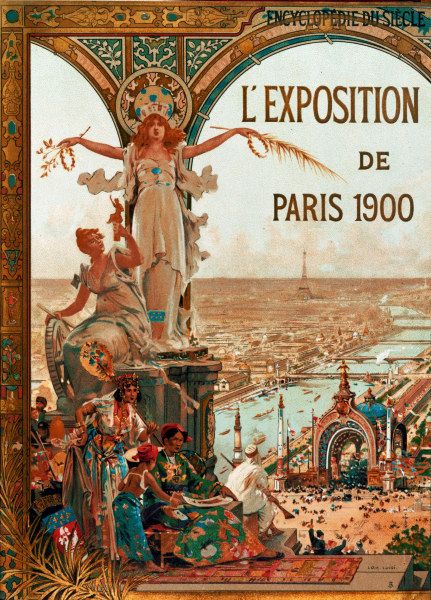
1900 Paris Exposition

The Exposition Universelle of 1900, better known in English as the 1900 Paris Exposition, was a world’s fair held in Paris, France, in November 1900, to celebrate the achievements of the past century and to accelerate development into the next.
1900 Paris Exposition

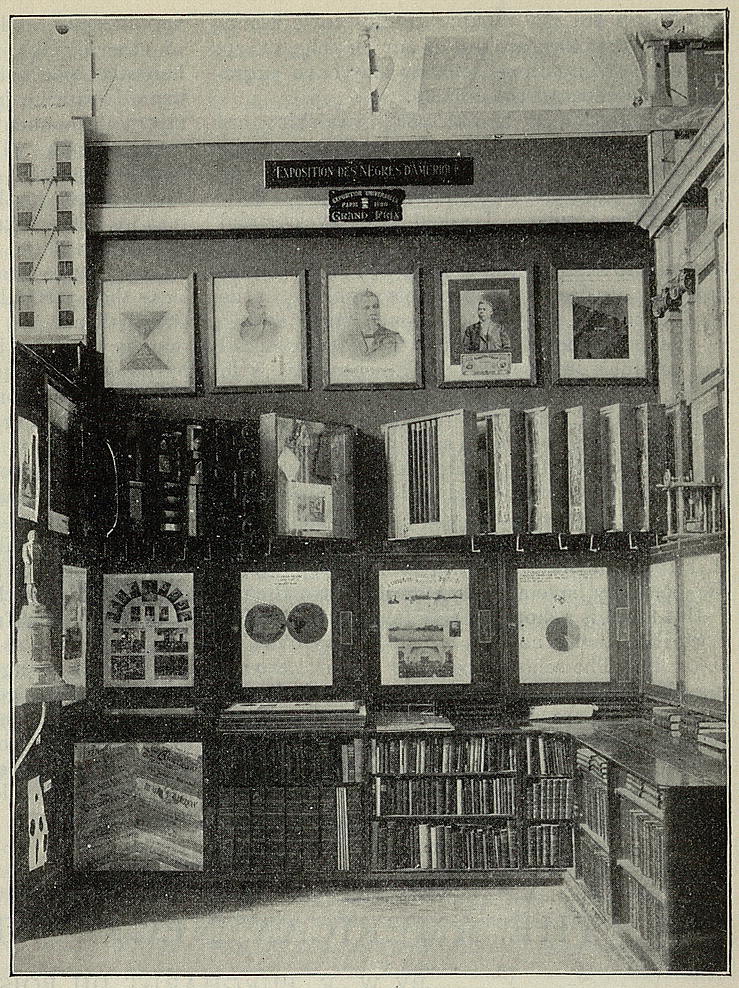
  • Du Bois’s visualizations were part of the Exposition des Nègres d’Amérique (The Exhibit of American Negroes), an exhibit organized by newspaper editor Thomas Junius Calloway.

  • The goal of the exhibit was to tell the story of African Americans after Emancipation using a variety of items including texts, portraits, and data visualizations.

  • The exhibit highlighted the progress made by African Americans, and Du Bois, in particular, used data and visualizations to counter the “narrative of Black inferiority” and to humanize the African American experience.

  • Visualizations and photographs from the 1900 Paris Exposition are available in the Library of Congress digital collection.
Data

  • Data collected by Du Bois’s sociology lab, government reports, and data from the United States Census by Du Bois and his students.

  • Used to create two sets of visualizations: one focusing specifically on the experience of African Americans in Georgia and one focusing on more national-level statistics and trends.

Style

  • Hand drawn using ink, watercolor, and graphite.

  • They stood out from other visualizations of the time with their bright colors and modern style, an intentional design choice by Du Bois to make more effectively convey the message to the Parisian audience.

Taxonomy of visualizations

The approximately 60 visualizations produced for the 1900 Exposition fall into five categories:

  • Bar charts
  • Maps
  • Circles (spirals, pies, fans)
  • Blocks (area graphs, geometric)
  • Line graphs

Dimensions

  • The original visualizations were large format 22 x 28 inch posters, mostly in portrait orientation.

  • To recreate this layout, use an aspect ratio of approximately 0.78 (portrait) or 1.27 (landscape).

  • For digital recreations: 1584 x 2016 pixels at 72 pixels/inch duplicates the original canvas size.

Typography

  • Titles: Hand-lettered, sans-serif bold, centered, ALL-CAPS with a period at the end. Titles typically span 2-3 lines.

  • Body text: Smaller serif font, often in a lighter weight.

  • Annotations: ALL-CAPS, lighter weight and color, often using rotated text.

Recommended fonts for recreations

If you feel adventurous and want to recreate the typography, here are some recommended fonts that are similar to the ones used by Du Bois:

Purpose Font
Sans-serif (titles) Public Sans
Serif (body) Charter
Homage font DU BOIS (by Vocal Type)

Spiral charts

  • One of the most distinctive Du Bois innovations.

  • Instead of stretching out large measures linearly, the values are “rolled up” in a spiral.

  • Used to show growth over time (e.g., property values, household assets).

  • Often highlighted as iconic examples of Du Bois’s creative approach to data visualization.
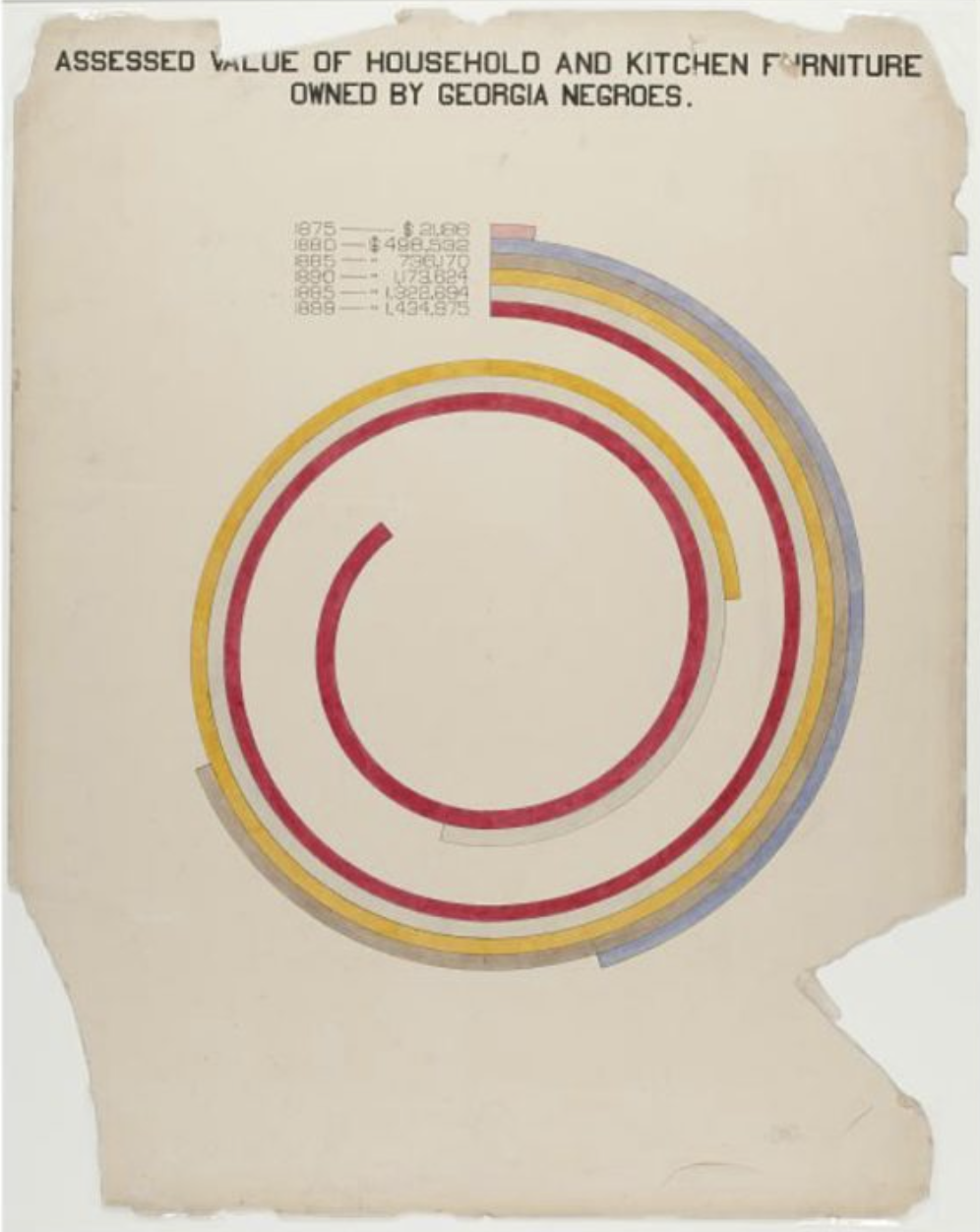
“Assessed Value of Household and Kitchen Furniture Owned by Georgia Negroes” showing the spiral technique

Maps

  • The second most prevalent visualization type .

  • Choropleth maps of US states or Georgia counties filled with color to indicate measures like population distribution.

  • Include colored legends with outlined circles to denote categories.

  • Some maps use filled silhouettes to compare the US with other countries.

Unconventional bar variations

Du Bois innovated beyond conventional bar charts:

  • Wrapped bars: When values are too large, bars wrap across 2-3 lines

  • Woven bars: Interlocking pattern of two contrasting colors to compare two groups (e.g., two cities)

  • Shaped bars: Bars that echo the shape of their subject (e.g., Georgia-shaped bars for Georgia data)

  • Proportion bars: 1-3 vertical bars with 2-3 solid colors showing proportions, sometimes tilted 45 degrees
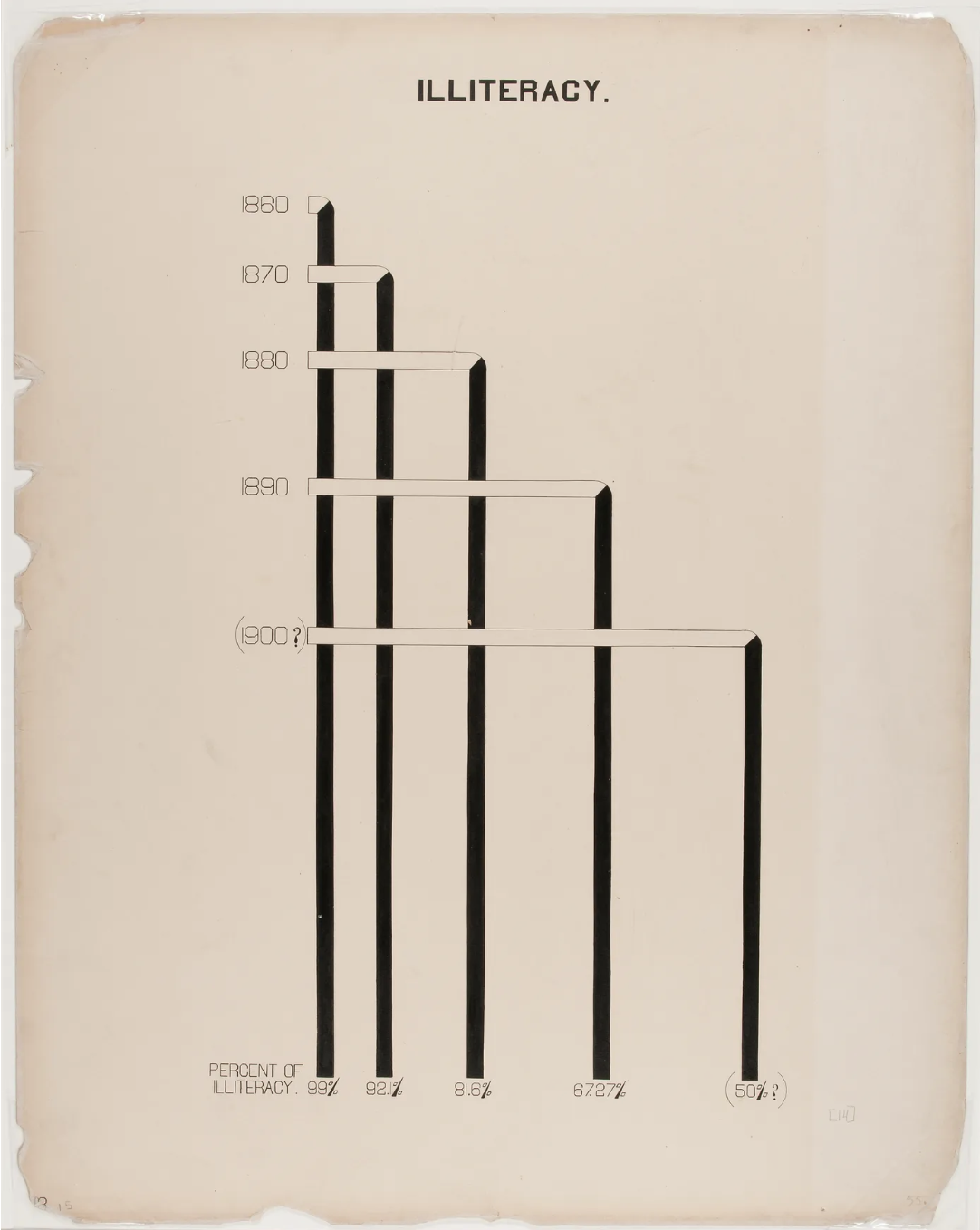
“Illiteracy” showing the woven bar technique

A few examples + discussion

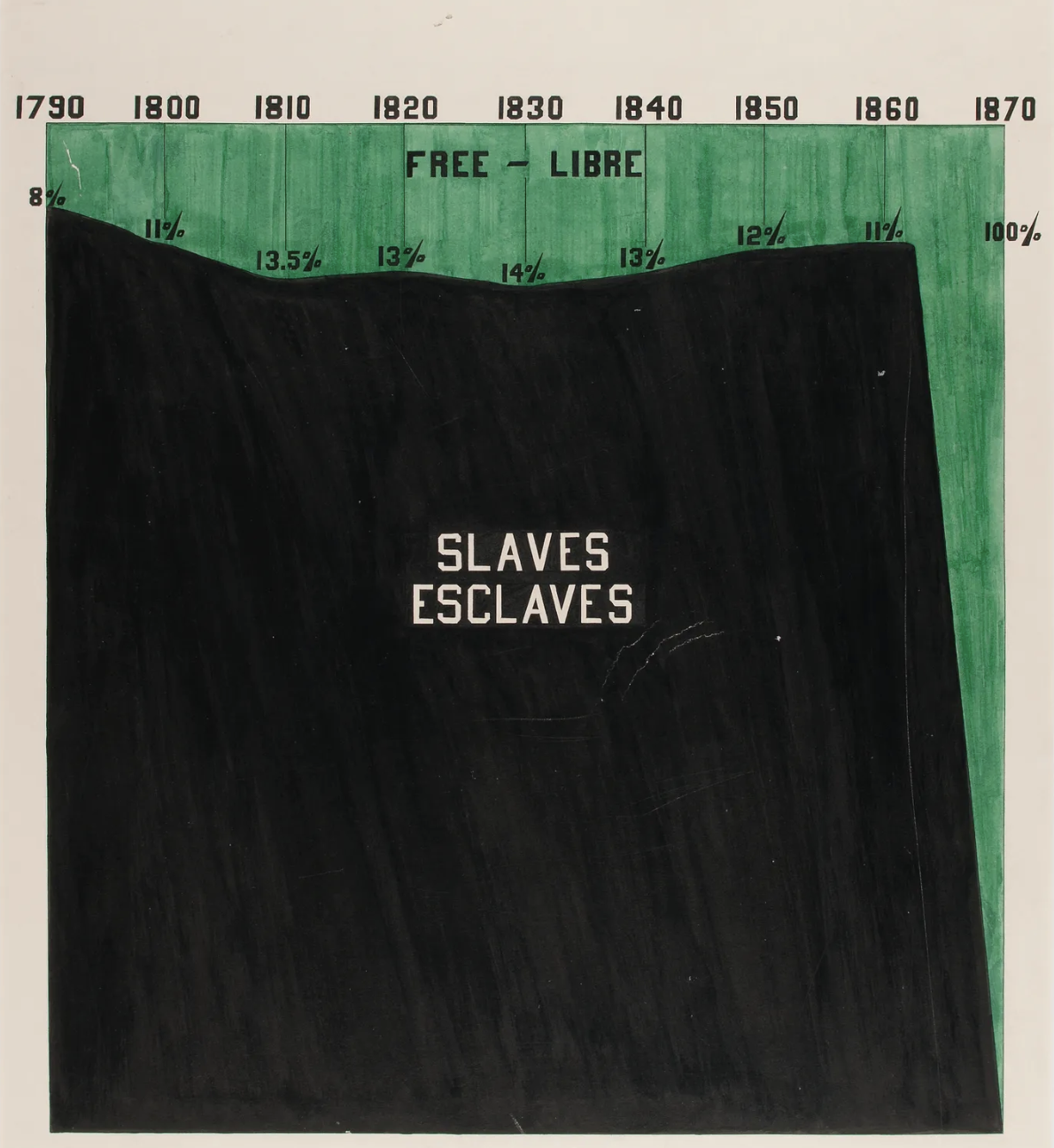
For each of the following visualizations: Review the plot and provide an interpretation for it. Then, identify what is striking as well as features that are in line with common data visualization “best practices” vs. features that don’t conform to them. Discuss whether these help the point being made or not.

Proportion of Freemen and Slaves

“Proportion of Freemen and Slaves among American Negroes”, 1900, via Library of Congress Prints and Photographs Division

Illiteracy

“Illiteracy” 1900, via Library of Congress Prints and Photographs Division

City and rural population
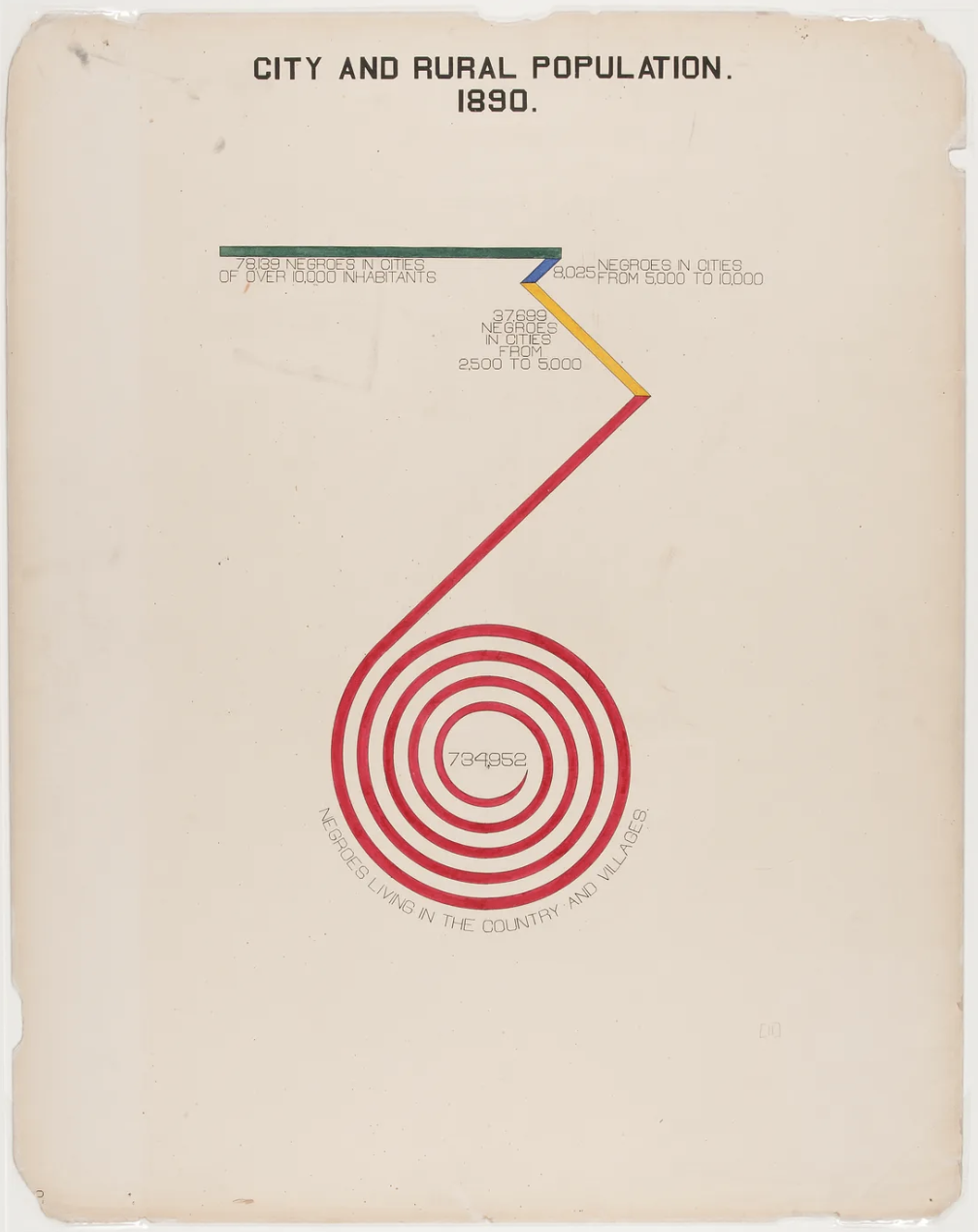
“City and Rural Population. 1890” 1900, via Library of Congress Prints and Photographs Division

Inspiration for today’s activity

  • In February 2021, Allen Hillery, Athony Starks, and Sekou Tyler, started the #DuboisChallenge, and annual online challenge where participants use modern data visualization tools such as R, Python, Tableau, etc. to recreate the data visualizations by W.E.B. Du Bois.

  • The seven-week challenge included 10 out of the 63 visualizations in the original exhibit. Each week, participants were tasked with recreating one of the visualizations and there were three “bonus” visualization challenges. People used social media to share their recreations side-by-side with the originals using the tag #DuBoisChallenge, and many shared the code they used for the recreation.

  • The challenge has been taking place annually in February since then, including this year!

Recreation activities

The most prevalent type of visualizations created by W. E. B. Du Bois are bar charts, so the activities (ae-07) will focus on recreating the following, seemingly simple, bar charts.
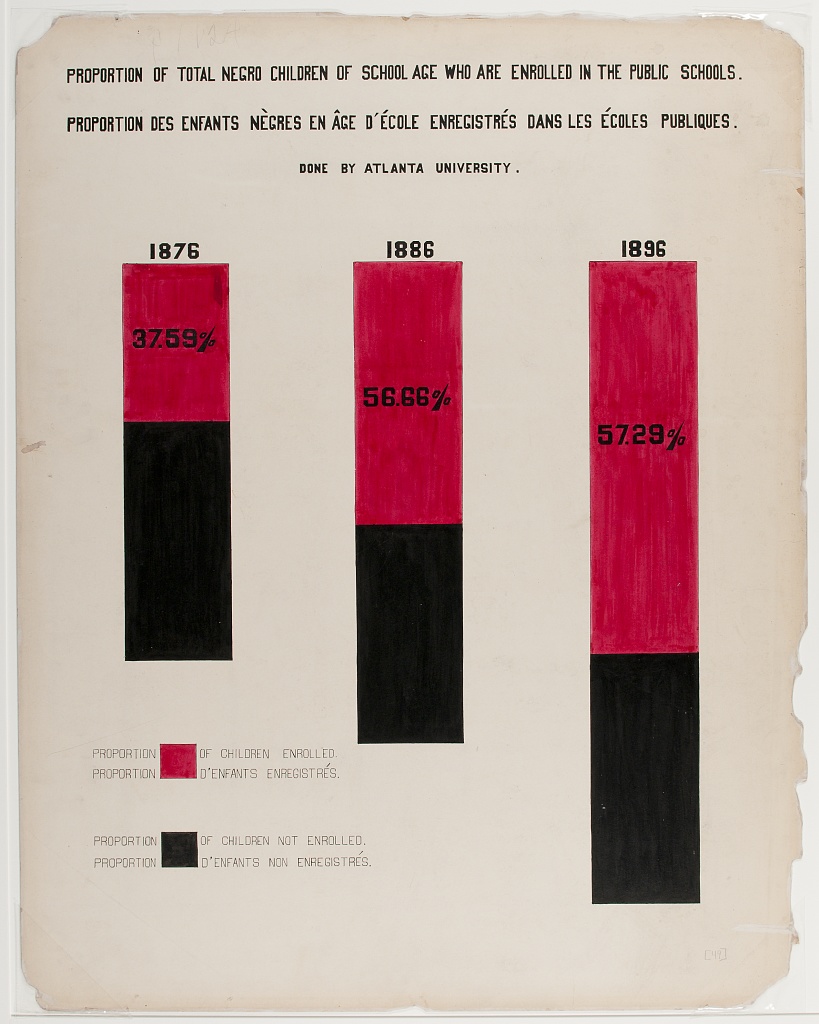
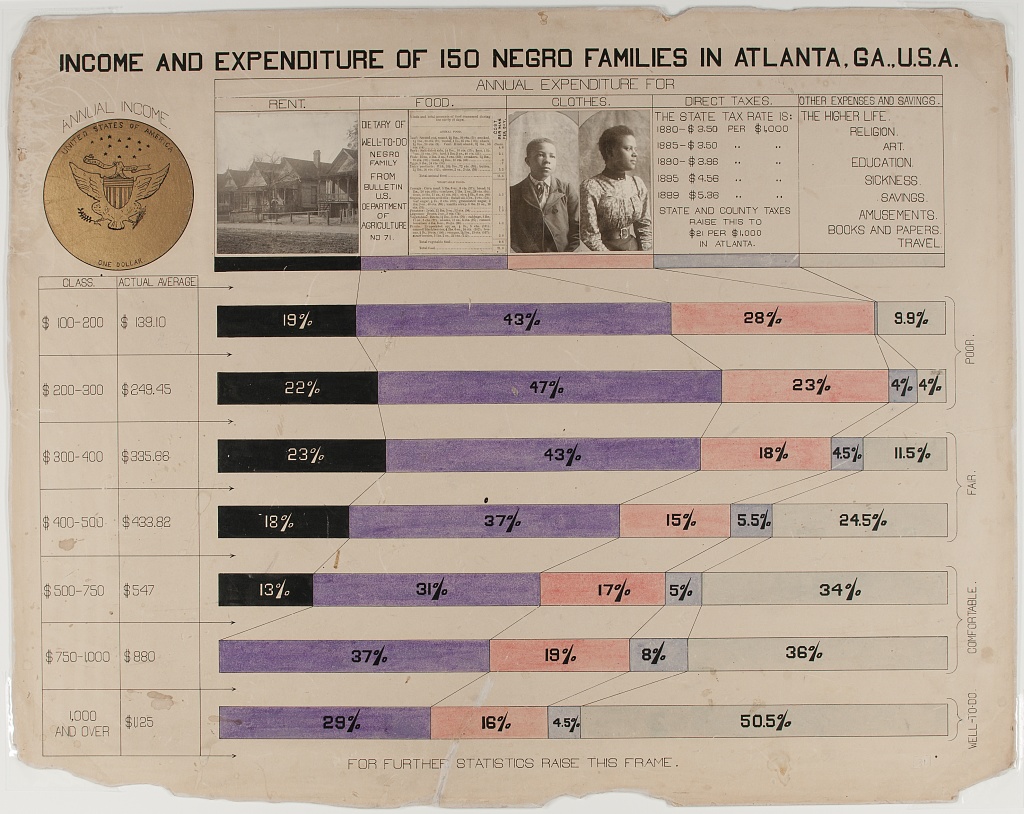
(a) Plate 49


(b) Plate 31
Figure 1: Two data visualizations by W.E.B. Du Bois.

Further reading